Summary

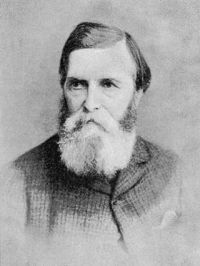
Portrait of R. M. Ballantyne R. M. Ballantyne Red Rooney: The Last of the Crew

These thoughts arise from the remembrance of Okiok as he stood one morning open-mouthed, open-eyed, open-souled, and, figuratively, petrified, gazing at something over a ledge of rock.
What that something was we must learn from Okiok himself, after he had cautiously retired from the scene, and run breathlessly back towards the Eskimo village, where the first man he met was Red Rooney.
“I—I’ve seen it,” gasped the Eskimo, gripping the seaman’s arm convulsively.
“Seen what?”
“Seen a man—on fire; and he seems not to mind it!”
“On fire! A man! Surely not. You must be mistaken.”
Source: Gutenberg

Portrait of R. M. Ballantyne R. M. Ballantyne Red Rooney: The Last of the Crew

But it is to your eye, perhaps, that the strongest appeal is made, for while you throw off one by one the garments which have protected you for so many months, and open up body and soul to the loved, long-absent, influences of warmth, and sound, and odour, your eye drinks up the mighty draughts of light—light not only blazing in the blue above, but reflected from the blue below—for the solid ice-fields are now split into fragments; the swell of old Ocean sends a musical ripple to the shore
Source: Gutenberg

Portrait of R. M. Ballantyne R. M. Ballantyne Red Rooney: The Last of the Crew

Angut looked surprised.
“They must be fools,” he said. “I see a sledge, and I know that some man made it—for who ever heard of a sledge making itself? I see a world, and I know that the Great Spirit made it, because a world cannot make itself. The greatest Spirit must be One, because two greatests are impossible, and He is good—because good is better than evil, and the Greatest includes the Best.”
The seaman stared, as well he might, while the Eskimo spoke these words, gazing dreamily at the lamp-flame, as if he were communing with his own spirit rather than with his companion.
Source: Gutenberg

Get perspective with Kwize: daily news enlightened by great literature