AI-generated from sources
The impossible peace: reconciling political settlement and spiritual unity
In Brief
- Peace is conceptually divided into two paradigms: peace as a political settlement (Realpolitik) achieved via negotiation and power, and peace as a spiritual foundation based on universal human unity.
- Pragmatic peace relies on statecraft, treaties, and enforcement, serving to manage conflict and maintain stability through a balance of power rather than eliminating root causes.
- Spiritual peace necessitates a radical internal shift, eradicating prejudice and establishing oneness; without this inner state, any external agreement is merely an 'apparent peace' or 'armed peace.'
- Durable tranquility requires an integrated architecture where external political frameworks are built upon an internal bedrock of shared moral consensus and spiritual transformation.
Main authors

The conception of peace is fundamentally contested, bifurcating into two distinct and often competing philosophies. One perspective, rooted in pragmatism and statecraft, views peace as a political settlement—a tangible outcome achieved through negotiation, power brokerage, and the establishment of enforceable international agreements [1, 2]. This approach treats peace as a manageable, albeit constant, problem of international relations, addressed through diplomatic maneuvering and the strategic balancing of interests [3, 4]. It is the art of the possible, focused on ending active hostilities and creating stable frameworks for coexistence.
In stark contrast stands a vision of peace as a spiritual foundation, an ideal that transcends political expediency [5, 6]. This perspective posits that true, enduring peace cannot be legislated by treaties or enforced by arms because its origins are not in the state but in the human heart [7]. It is defined as a profound internal transformation, a harmonizing of souls through the recognition of a universal human unity and the eradication of prejudice [8, 9]. This view argues that without a revolution in consciousness, any political arrangement is merely a temporary truce, a superficial calm masking underlying discord [10].
This fundamental divergence raises critical questions about the nature of lasting tranquility. Are the pragmatic negotiations of political leaders and the idealistic visions of spiritual thinkers mutually exclusive paths? Or does the construction of a durable peace require an integrated architecture, one where the external structures of political settlements are built upon the unshakeable bedrock of a shared spiritual and moral foundation? The tension between these two paradigms reveals a deeper debate about the very sources of human conflict and the ultimate requisites for its resolution [11].
The Realpolitik of Peace as a Negotiated Settlement
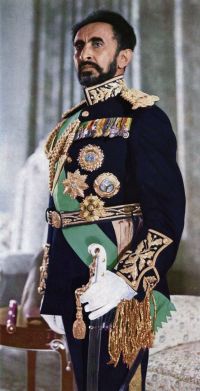
The political conception of peace is grounded in the reality of a world composed of sovereign states with competing interests. In this view, peace is not a permanent state of grace but a continuous, practical endeavor, described by Haile Selassie as a "day-to-day problem" shaped by a multitude of events and judgments . Its pursuit is the domain of statesmanship and diplomacy, requiring active involvement from nations to mediate and facilitate agreements [12]. The primary agents of this peace are governments, and its instruments are treaties, accords, and internationally recognized frameworks that define the terms of coexistence [13, 14, 15]. This process often relies on the influence of powerful third-party nations, which, while unable to force an outcome, can help create an environment conducive to negotiation and compromise between conflicting parties .
At the core of this model is the transaction—the deal brokered between former adversaries. These agreements are celebrated as historic breakthroughs, representing tangible progress after decades of stalemate . The emphasis is on securing concrete commitments and establishing mechanisms for de-escalation and cooperation. The goal is to build coalitions of partners who share an interest in stability and the stamping out of extremism, thereby providing a more hopeful future [16, 17]. This form of peacemaking is often incremental, aiming to manage and contain conflict rather than eliminate its root causes entirely.
Crucially, this pragmatic peace is often underwritten by power. The idea that peace must be made secure by the "organized major force of mankind" suggests that stability relies on a credible capacity for enforcement [18]. To ensure that agreements are honored, the international community must be prepared to develop alternatives to violence that are nonetheless strong enough to alter behavior, such as economic sanctions . In this framework, peace and security are intertwined; achieving peace often involves strategic alliances and a commitment to collectively defeat forces, such as terrorism and illegal militias, that threaten the established order . It is a peace born of calculation and maintained by a vigilant balance of power.
The Spiritual Imperative for Universal Unity
In direct opposition to the political model, the spiritual conception of peace redefines it not as a negotiated cessation of hostilities but as a positive, generative force. It is depicted as life, light, and divine guidance, whereas war is death, darkness, and error [19]. This peace is not a civil or political construct but a "spiritual and heavenly" condition of a fundamentally different nature [20]. Thinkers like James Allen argue that it cannot be found in worldly victory or social comfort, which are transitory, but only in a profound selflessness and wisdom . This perspective asserts that any peace not rooted in this inner state is illusory.
A central tenet of this philosophy is that human and material agencies are inherently incapable of establishing universal peace . Political efforts are seen as intrinsically limited by the selfish and divergent interests of nations, and human opinions are too faulty and diverse to form a basis for true harmony . Consequently, a higher, "universal impelling force" is deemed necessary—a spiritual power that can unite humanity, remove the causes of strife, and establish a fraternity that transcends material divisions [21]. This spiritual brotherhood is described as being kindled by the "breaths of the Holy Spirit," capable of transforming mankind into a single family .
The attainment of this spiritual peace is contingent upon a radical shift in human consciousness. It requires the complete abolition of the barriers that separate people, including racial, national, and religious prejudices [22]. The foundation of this peace is the principle of the oneness of humanity, a recognition that all people are servants of the same God and members of one family [23]. Saint Aquinas Thomas contributes a crucial distinction between "true peace" and "apparent peace," arguing that true peace can only exist where the appetite is directed toward what is truly good . Any semblance of calm that coexists with internal evil or unresolved hatred is merely a fragile and deceptive facade, not the enduring tranquility that constitutes genuine peace . This vision demands not a new treaty, but a new kind of human being, liberated from prejudice and united in spiritual concord [24].
The Fragility of a Superficial Peace
The limitations of a peace founded solely on political or military arrangements are a recurring theme. Critics describe a purely pragmatic peace as an "armed peace," a state of affairs built not on genuine trust but on mutual suspicion [25, 26]. Such a condition is seen as a flagrant contradiction, where pacific declarations are belied by massive military preparations, betraying a concealed hostility . Peace purchased at the price of brute force is deemed "unworthy of the name," a temporary imposition of will rather than a resolution of conflict [27]. This highlights the inherent instability of any settlement that fails to address the underlying animosities that fuel war.
Furthermore, a distinction is drawn between external calm and internal reality. A society can maintain "civil peace" while being devoid of "spiritual and heavenly peace" . This concept of an "apparent peace" is explored by multiple thinkers who observe that outward success and tranquility can mask inner turmoil, where individuals secretly burn with enmity, hatred, and cruelty [28]. James Allen echoes this, stating that people cry "peace! peace! where there is no peace," because any calm resulting from mere worldly victory or comfort is transient and cannot withstand trial . Such a peace is not a genuine state of being but a fragile illusion, liable to shatter when confronted with adversity.
A durable peace also appears to require a moral and just foundation, without which it cannot be considered legitimate or lasting. Jean-Jacques Rousseau argues that any agreement founded upon violence, such as the right of conquest, is null and void, as it fails to create a true society and instead perpetuates a state of war [29]. Similarly, peace must be built upon truth to be lasting [30]. In a more challenging formulation, some sources suggest that an unexamined peace can even lead to the decay of foundational virtues like courage and resilience, which are often forged in the crucible of conflict [31]. This implies that a just and meaningful peace must be more than the mere absence of war; it must be a state that actively fosters virtue and is grounded in justice and truth.
The discourse on peace reveals a profound chasm between two paradigms: one that seeks to manage conflict through political structures and another that aims to transcend it through spiritual transformation. The political settlement offers necessary, tangible mechanisms for halting violence and creating frameworks for coexistence . International tribunals, negotiated treaties, and third-party mediations are indispensable tools of statecraft . However, the evidence suggests these external arrangements are inherently fragile when they are not anchored in a deeper consensus. They risk creating a mere "armed peace" based on distrust or an "apparent peace" that masks simmering resentments , ultimately failing to establish true and lasting security.
A more holistic and enduring architecture of peace seemingly requires a synthesis of both approaches. The external machinery of political agreements must rest upon the internal foundation of a transformed human consciousness [32]. Lasting peace is not only a matter for diplomats and generals but also a moral and spiritual project that demands the eradication of prejudice, the promotion of universal fraternity, and the establishment of justice as the governing principle of human relations [33]. The ultimate challenge, therefore, is to bridge the gap between the pragmatic necessities of a world of nations and the profound, unifying potential of a shared spiritual heritage. Only then can humanity move from a state of managed conflict to one of genuine, universal peace.