AI-generated from sources
The persuadable temper: Why Jane Austen distrusted monolithic firmness of character
In Brief
- Traditional moral philosophy champions rigid firmness and resolute will as an absolute virtue, indispensable for honor and success in life.
- Jane Austen challenges this ideal, suggesting that inflexible resolution, when not guided by reason and empathy, often devolves into folly, stubbornness, and personal unhappiness.
- Austen champions the 'persuadable temper'—a profound capacity for reflection, adaptation, and emotional growth—as the genuine hallmark of ethical maturity.
- True strength is not static rigidity but the dynamic resilience that allows an individual to recognize and rectify their errors, leading to a state of rational happiness through connection.
Main authors

Moral philosophy has frequently championed firmness of character as a preeminent virtue, a manly bulwark against the vicissitudes of life and the temptations of vice [1, 2]. This resolute quality is often depicted as the very engine of success and the guardian of honor, an indispensable tool for navigating a world fraught with peril [3, 4]. From this perspective, strength of purpose is achieved through the disciplined exercise of free will, a conscious effort to resist wayward passions and stand firm against misfortune [5, 6]. A lack of such solidity is seen as a path to ruin, a failure to slight present pleasures for future security, ultimately leaving one overcome by circumstances [7]. Character, in this tradition, is something to be forged in the fires of trial and then held immutable, a testament to self-control and moral consistency [8, 9].
Jane Austen's novels, however, present a subtle but profound challenge to this monolithic exaltation of steadfastness. Her works meticulously explore the complex interplay between disposition, circumstance, and happiness, ultimately questioning the universal advantage of an unyielding will [10]. Instead of celebrating unwavering resolution, Austen's narratives suggest that such a trait, like all other qualities of the mind, must have its proper "proportions and limits" . Through the emotional journeys of her characters, she argues that a "persuadable temper"—a capacity for reflection, adaptation, and emotional change—is often a more reliable guide to personal fulfillment and ethical maturity. In her fictional world, the refusal to bend is not always a sign of strength but can be a form of folly, leading characters to sacrifice their own well-being on the altar of a misguided principle [11, 12].
The Folly of Inflexible Resolution
While many ethical frameworks equate a resolute will with virtue, Austen's fiction demonstrates how an overabundance of firmness, or its misapplication, can devolve into a critical flaw. Inflexible resolution often manifests as a stubborn refusal to adapt to new information or emotional realities, leading directly to unhappiness. The character of Charles Bingley, for instance, is criticized not for being persuadable, but for a "want of proper resolution" that allows him to be swayed by malicious advice against his own affections, thereby sacrificing his own happiness and Jane Bennet's . His pliability becomes a vice because it is not guided by sound judgment. Conversely, characters who pride themselves on their firmness can become trapped by their own convictions, unable to correct their course even when faced with evidence of their error. This rigidity transforms a potential virtue into a mechanism for self-sabotage, proving that strength of character must be rooted in something more than mere consistency .
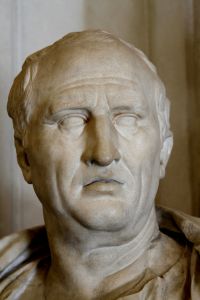
An unyielding disposition is often linked to a sharpness of temper, a quality that is particularly unbecoming when combined with social power or influence [13]. Cicero noted that such harshness indicates a lack of mental solidity, a view that resonates within Austen's social landscapes . A character who cannot be reasoned with, who refuses to bend to rational argument or emotional appeal, is not portrayed as strong but as dangerously brittle. This inflexibility can prevent individuals from recognizing the humanity of others, fostering a form of contempt that George Meredith identifies as a way to be "idly minded, or personally lofty, or comfortably narrow" [14]. Such an attitude shuts down the brain and prevents true understanding, making genuine connection and the happiness that flows from it impossible . The truly foolish individual is often the one who, priding themselves on their consistency, persists in a state of rebellion against reason and affection .
The ultimate folly of an inflexible character is its denial of human fallibility and the potential for growth. The belief in one's own unassailable judgment can lead to a state of misery, as characters realize too late what they have lost through their obstinacy [15]. They become convinced they could have been happy only after the opportunity has passed, a direct consequence of their earlier refusal to be persuaded . This contrasts sharply with William Blake's paradoxical assertion that a fool who persists in his folly will become wise [16]. In Austen's more pragmatic universe, persisting in the folly of pride or prejudice does not lead to enlightenment but to regret and isolation. The inability to question one's own opinions is a moral and intellectual dead end, a state of being that is neither virtuous nor conducive to a fulfilling life [17].
The Virtue of a Persuadable Temper
In direct opposition to the ideal of the immovable will, Austen champions the virtue of a persuadable temper. This quality is not synonymous with weakness or a lack of conviction; rather, it represents a profound capacity for intellectual and emotional growth. It is the ability to listen, to reflect, and, most importantly, to change one's mind in the face of compelling evidence or genuine feeling. The arc of Elizabeth Bennet in Pride and Prejudice serves as the quintessential example of this virtue in action. Her happiness is secured not by holding fast to her initial judgments of Darcy, but by allowing her sentiments to undergo a "material a change" after receiving new information [18]. This transformation is presented as a triumph of character, a victory of reason and self-awareness over pride.
This capacity for change is central to achieving happiness in many of Austen's narratives. Happiness is rarely a static state achieved by a fixed character, but a dynamic process born from mutual understanding and emotional adjustment. In Emma, both the hero and heroine achieve "perfect happiness" only after a period of ignorance, jealousy, and distrust is cleared away by open communication and a radical shift in perspective [19]. Their fulfillment is contingent on their ability to be persuaded of their own errors and of the other's true affections. This underscores the idea that relationships require a willingness to bear with the imperfections of others, a skill rooted in a flexible and accommodating temper [20, 21]. Characters who are unable to adapt remain isolated, while those who can evolve find connection and contentment [22].
A persuadable nature is also crucial for navigating the complexities of social existence. Success in life, and particularly in relationships, often depends less on raw talent or genius than on temper and self-control [23]. The ability to manage one's own impulses and respond thoughtfully to others is a key component of emotional intelligence. Austen suggests that differing tempers can complement and support one another, as when a cheerful disposition counteracts a tendency toward dejection [24]. This vision of collaborative well-being stands in contrast to the ideal of the solitary individual who must achieve virtue through sheer force of will . Happiness, in Austen's view, is relational and requires a degree of malleability that a rigidly resolute character cannot possess.
Character in Formation: Beyond Static Virtue
Austen's treatment of character aligns with the philosophical understanding that virtue is not innate but acquired through practice and training [25]. However, she expands this concept by emphasizing that the process of character formation is continuous and must include the possibility of profound revision. It is not simply about reinforcing a set of initial principles but about refining them through experience and reflection. The development of a good character requires constant self-watchfulness and self-discipline, a process that involves faltering and recovery . True virtue arises from resisting temptation, which requires choice and the capacity to correct a poor choice [26]. Austen's most admirable characters are those who engage in this difficult work of self-correction.
This perspective offers a more nuanced understanding of strength. While some moralists argue that strong, pertinacious tempers can be molded into "steady and sterling characters," Austen demonstrates that this is only possible if that strength is paired with self-awareness [27]. A character that is merely obstinate is of little value. The key is the ability to be persuaded by reason and goodness, not by flattery or social pressure. The wisdom lies in discerning the right influences from the wrong ones. A character's firmness must be directed toward a worthy object; otherwise, it is simply stubbornness, a quality closer to vice than virtue [28].
Ultimately, Austen's novels suggest that character is not a monument to be erected and then defended against all change. It is a living, evolving aspect of the self. The pursuit of happiness requires not just integrity but also adaptability. The wise person, as distinct from the fool, is not one who never errs, but one who can recognize and rectify their errors [29]. They possess a form of self-control that allows them to forbear and forgive, smoothing the road of life for themselves and others . This vision redefines strength, locating it not in unbreakability, but in the resilience that comes from a mind open to change and a heart capable of persuasion.
In her nuanced exploration of human nature, Jane Austen reframes the conventional discourse on character. She challenges the unequivocal praise of firmness, showing it to be a quality that, without the moderating influence of reason and empathy, can lead to arrogance, isolation, and profound unhappiness . Her work serves as a powerful argument that all mental qualities, including resolution, must have their "proportions and limits" to be considered virtuous . The true strength she champions is not the static resilience of a fortress, but the dynamic strength of a living thing capable of growth and adaptation. The capacity to be persuaded by truth, to admit error, and to allow one's sentiments to evolve is presented as the hallmark of a mature and admirable character .
The ultimate goal for Austen's protagonists is a state of rational happiness, a durable contentment founded on self-knowledge and mutual affection . This state is rarely achieved by characters who cling stubbornly to their initial convictions. Instead, it is the reward for those who undertake the difficult journey of self-correction, who possess a persuadable temper that allows them to see the world and themselves more clearly. In Austen's moral universe, the ability to change one's mind is not a sign of weakness but the very engine of personal growth and the essential precondition for a life of meaning and connection.