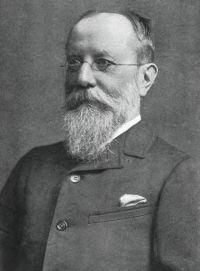
Edward Dannreuther

Biographical details

Portrait of Edward Dannreuther Edward Dannreuther A Dictionary of Music and Musicians (1900)

ZUKUNFTSMUSIK, la musique de l'avenir, the Music of the Future. A journal for 'music to come' is still wanting, writes Schumann [1] as early as 1833, 'Eine, Zeitschrift für zukünftige Musik fehlt noch'—and 'of course,' he continues in his humorous way, 'only men like the old blind Cantor at the Thomas-schule (Bach) or the deaf Capellmeister who rests at Vienna (Beethoven) would be fit editors.' Schumann himself became such an editor in 1834, and during the next ten years his paper, the 'Neue Zeitschrift für Musik,' was mainly instrumental in bringing about a new state of things.
Source: Wikisource

Portrait of Edward Dannreuther Edward Dannreuther A Dictionary of Music and Musicians (1900)

Some of Wagner's adherents in Germany and in England endeavoured subsequently to limit the use of the term and to define its meaning: with them, 'Zukunftsmusik,' as distinguished from music written in the traditional classical form, is taken to signify music in which the outlines of form are modified by some general poetical idea or some particular programme, as in Liszt's Poèmes symphoniques, or by the progress of the dramatic action, as in Wagner's dramas. Whether such a definition was prompted or sanctioned by Liszt or by Wagner need not be considered here.
Source: Wikisource

Get perspective with Kwize: daily news enlightened by great literature