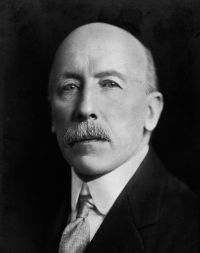
Frederic George Kenyon

Biographical details

Portrait of Frederic George Kenyon Frederic George Kenyon Dictionary of National Biography… (1912)

Ridding was himself a fine classical scholar and a stimulating teacher, and by a system of periodical inspection he kept the whole teaching of the school under his own eye. He had the gift of commanding both the respect and the affection of his pupils, and the perhaps rarer gift of carrying with him in a course of drastic reforms the co-operation and devotion of his assistant masters. His reforms were often viewed with disfavour by the fellows, who before 1871 constituted the governing body of the college, and were strenuously criticised by Wykehamists in general
Source: Wikisource

Portrait of Frederic George Kenyon Frederic George Kenyon Dictionary of National Biography… (1912)

In population the diocese was the fifth in England, but it had no chapter, no diocesan funds, no common organisation ; the two counties had diverse traditions, and much of the patronage remained in the hands of external bishops and chapters. Ridding's work was to bring unity and a corporate spirit out of diversity and jealousy, to create all kinds of diocesan organisations, to raise the intellectual standard of the clergy, and to stimulate spiritual Life in neglected districts. As at Winchester, he was not understood at first, and encountered some opposition
Source: Wikisource

Portrait of Frederic George Kenyon Frederic George Kenyon Dictionary of National Biography… (1912)

Educationally Ridding was a pioneer in the expansion of the curriculum of public schools. He was one of the founders of the headmasters' conference in 1870, and of the Oxford and Cambridge schools examination board in 1873; but he did not wait for the collaboration of other headmasters to carry out the reforms which he saw to be desirable. He more than doubled the staff of assistant masters. He greatly enlarged the scope of the mathematical teaching
Source: Wikisource

Get perspective with Kwize: daily news enlightened by great literature