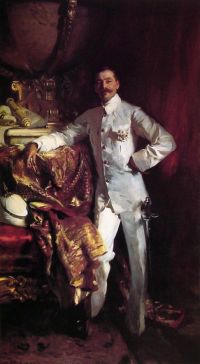
George Sydenham Clarke

Biographical details

George Sydenham Clarke,  1911 Encyclopædia Britannica, Volume 12… (1911)

“ Larissa being abandoned by the Greeks, Velestino, the junction of the Thessalian railways, where there was a strong position covering Volo, seemed to be the natural rallying point for the Greek army. Here the support of the fleet would have been secured, and a Turkish advance across the Othrys range upon Athens could not have taken place until the flanking position had been captured. Whether by direction or by natural impulse, however, the mass of the Greek troops made for Pharsala, where some order was re-established, and preparations were made to resist attack. ”
Source: Wikisource

George Sydenham Clarke,  1911 Encyclopædia Britannica (1911)

“ COALING STATIONS. Maritime war in all ages has required that the ships of the belligerents should have the use of sheltered waters for repairs and for replenishment of supplies. The operations of commerce from the earliest days demanded natural harbours, round which, as in the conspicuous instance of Syracuse, large populations gathered. Such points, where wealth and resources of all kinds accumulated, became objects of attack, and great efforts were expended upon their capture. ”
Source: Wikisource

Get perspective with Kwize: daily news enlightened by great literature