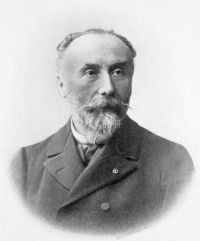
Louis Charles Émile Lortet

Biographical details

Portrait of Louis Charles Émile Lortet Louis Charles Émile Lortet Popular Science Monthly (1876)

Some of the young, arrived at the perfect state, continue to live in the gills. All have the head directed toward the buccal opening of the father, the protecting cavity of which we have not seen them leave even for a moment. Though so numerous, they hold their ground very firmly, yet how they do so we have not discovered. Neither can we understand how the nursing father avoids swallowing his progeny; we are also ignorant at what period of their life the young ones leave the paternal mouth to live independently.
Source: Wikisource

Portrait of Louis Charles Émile Lortet Louis Charles Émile Lortet Popular Science Monthly (1876)

The Chromis pater-familias has the gills disposed in simple laminæ; it is unprovided with any special apparatus for retaining the eggs or the young ones, and yet it brings up about 200 young in the mouth and gills. It is always the male that performs these functions of incubation. After the female has deposited the eggs in a depression of the sand or between the tufts of reeds, the male approaches and takes them by inhalation into the cavity of the mouth.
Source: Wikisource

Portrait of Louis Charles Émile Lortet Louis Charles Émile Lortet Popular Science Monthly (1876)

There, in the midst of the organs of respiration, the eggs undergo all their metamorphoses. The young ones grow rapidly, and soon appear much inconvenienced in their narrow prison. They leave it, not by the gills but through the opening by which the bronchial cavity communicates with the mouth. Here they remain in great number, pressed against one another like the seeds of a pomegranate. The animal's mouth becomes so distended by the presence of this numerous progeny that actually the jaws cannot meet. The cheeks are swollen and the animal
Source: Wikisource

Get perspective with Kwize: daily news enlightened by great literature