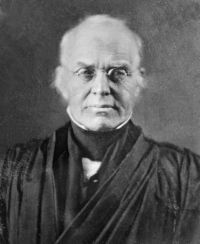
U.S. Superior Court for the Arkansas Territory; Benjamin Johnson; James Woodson Bates

Biographical details

U.S. Superior Court for the Arkansas Territory; Benjamin Johnson; James Woodson Bates United States v. Samperyac (1831)

And as Samperyac was a fictitious person, he was no party to the decree, and the act, in strictness, does not apply to the case. But, considering the act of 1830 as providing a remedy only, it is entirely unexceptionable. It has been repeatedly decided in this court, that the retrospective operation of such a law forms no objection to it. Almost every law, providing a new remedy, affects and operates upon causes of action existing at the time the law is passed. The law of 1830 is in no respect the exercise of judicial powers.
Source: Wikisource

U.S. Superior Court for the Arkansas Territory; Benjamin Johnson; James Woodson Bates United States v. Samperyac (1831)

Whether, admitting Stewart to be a bonâ fide purchaser of the claim of Samperyac, he is protected against the title set up by the United States.
1. We think it unnecessary to go into an examination of the questions which have been made under the first point. Although the act of 1824 directs, that every petition which shall be presented under its provisions, shall be conducted according to the rules of a court of equity, it may admit of doubt, whether all the powers of a court of chancery, in relation to bills of review, are vested in that court.
Source: Wikisource

U.S. Superior Court for the Arkansas Territory; Benjamin Johnson; James Woodson Bates United States v. Samperyac (1831)

It only organizes a tribunal with powers to entertain judicial proceedings. When the original decree was entered, there was no person in existence whose claim could be ripened into a right against the United States by omitting to appeal; Stewart was not only no party to the decree, but his purchase from Bowie was nearly a year after the decree was entered.
Had Samperyac been a real person, having a decree in his favor, and Stewart had afterwards purchased of Bowie the right which that decree established, it might have given him some equitable claim
Source: Wikisource

Get perspective with Kwize: daily news enlightened by great literature