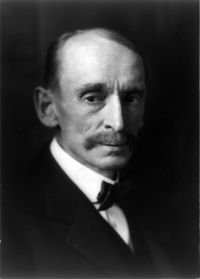
US Court of Appeals

Biographical details

US Court of Appeals Meinhard v. Salmon

I assume that where parties engage in a joint enterprise each owes to the other the duty of the utmost good faith in all that relates to their common venture. Within its scope they stand in a fiduciary relationship. I assume prima facie that even as between joint adventurers one may not secretly obtain a renewal of the lease of property actually used in the joint adventure where the possibility of renewal is expressly or impliedly involved in the enterprise. I assume also that Mr. Meinhard had an equitable interest in the Bristol Hotel lease.
Source: Wikisource

US Court of Appeals Meinhard v. Salmon

A tenant's expectancy of the renewal of a lease is a thing, tenuous, yet often having a real value. It represents the probability that a landlord will prefer to relet his premises to one already in possession rather than to strangers. Less tangible than "good will" it is never included in the tenant's assets, yet equity will not permit one standing in a relation of trust and confidence toward the tenant unfairly to take the benefit to himself. At times the principle is rigidly enforced.
Source: Wikisource

US Court of Appeals Meinhard v. Salmon

In short, as we once said, "the elements of actual fraud -- of the betrayal by secret action of confidence reposed, or assumed to be reposed, grows in importance as the relation between the parties falls from an express to an implied or a quasi trust, and on to those cases where good faith alone is involved."
Source: Wikisource

Get perspective with Kwize: daily news enlightened by great literature