Summary

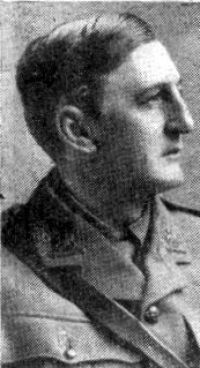
Portrait of A. E. W. Mason A. E. W. Mason The House of the Arrow — Chapter 16 (1924)

Even Hanaud was brought up with a start.
"I did not suggest it," he replied coldly. "But let me see!" and in a moment whilst his face was flushed with anger his hands were busily untying the tapes of the box.
Betty stepped forward.
"We talked over that little dress, together, Monsieur, more than a month ago. It is meant to represent a water-lily."
"What could be more charming?" Hanaud asked, but his fingers did not pause in their work.
"Could suspicion betray itself more brutally?" Jim Frobisher wondered. What could he expect to find in that box?
Source: Wikisource

Portrait of A. E. W. Mason A. E. W. Mason The House of the Arrow — Chapter 16 (1924)

The whole of that little scene might have been invented by him maliciously, just to annoy and worry and cause discomfort to Monsieur Bex and himself. Hanaud was very capable of a trick like that! A strain of the mountebank indeed! He had a great deal of the mountebank. More than half of him was probably mountebank. Possibly quite two-thirds!
"Oh, damn the fellow! What in the world did he notice?" cried Jim. "What did he notice from the top of the Tower? What did he notice in this hall? Why must he be always noticing something?"
Source: Wikisource

Portrait of A. E. W. Mason A. E. W. Mason The House of the Arrow — Chapter 16 (1924)

But Hanaud did not answer at all. He dashed back through the hall past Frobisher and his companion, vanished into the treasure-room, closed the door behind him and actually locked it.
Monsieur Bex jerked his chin high in the air.
"He is an eccentric, that one. He would not do for Dijon."
Jim was for defending Hanaud.
"He must act. That is true," he replied. "Whatever he does and however keenly he does it, he sees a row of footlights in front of him."
"There are men like that," Monsieur Bex agreed. Like all Frenchmen, he was easy in his mind if he could place a man in a category.
Source: Wikisource

Get perspective with Kwize: daily news enlightened by great literature