Summary

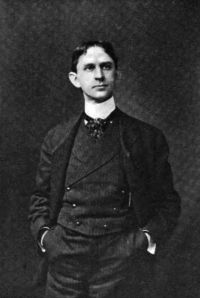
Portrait of Albert Bigelow Paine Albert Bigelow Paine The Boys' Life of Mark Twain — Chapter 63 (1916)

I could succeed better with the billiard-room talk—that was likely to be reminiscent, full of anecdotes. I kept a pad on the window-sill, and made notes while he was playing. At one time he told me of his dreams.
"There is never a month passes," he said, "that I do not dream of being in reduced circumstances and obliged to go back to the river to earn a living. Usually in my dream I am just about to start into a black shadow without being able to tell whether it is Selma Bluff, or Hat Island, or only a black wall of night.
Source: Wikisource

Portrait of Albert Bigelow Paine Albert Bigelow Paine The Boys' Life of Mark Twain — Chapter 63 (1916)

Then the audience realizes it, and pretty soon they commence to get up and leave. That dream always ends by my standing there in the semi-darkness talking to an empty house."
He did not return to Dublin the next summer, but took a house at Tuxedo, nearer New York. I did not go there with him, for in the spring it was agreed that I should make a pilgrimage to the Mississippi and the Pacific coast to see those few still remaining who had known Mark Twain in his youth. John Briggs was alive, also Horace Bixby, "Joe" Goodman, Steve and Jim Gillis, and there were a few others.
Source: Wikisource

Get perspective with Kwize: daily news enlightened by great literature