Summary

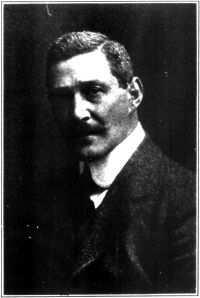
Portrait of Albert Kinross Albert Kinross An Opera and Lady Grasmere — Chapter 6 (1900)

Harvey, at that time, conceived all his operas in three acts, with the climax, amorous for the most part, in the middle one.
"Both deal with clandestine love, clandestine meetings, and violent death—look here, Sopwith, you take one, and I'll do the other?" he had remarked upon another and similar occasion.
"But mustn't we begin at the beginning?—and an opera's rather in the middle," replied the soberer Sopwith.
"The beginning is where one begins, and, if we begin in the middle, it's all right," retorted Merceron, logical for once. "How would King Lear or The Cenci suit you?"
Source: Wikisource

Portrait of Albert Kinross Albert Kinross An Opera and Lady Grasmere — Chapter 6 (1900)

WE have just accompanied young Harvey Merceron through as varied an entertainment as any that London affords the enterprising bachelor within so short a space of time; twelve hours, is not that the exact period which has elapsed between Hutchinson's breezy entry and the discovery of Isabella's providential exit?
We have seen Merceron blink, as the sailor drove him forth into the sunlight; we have seen him shake off lethargy and inaction, and run such riot as man too seldom enjoys. We have, all of us, looked on with envy
Source: Wikisource

Portrait of Albert Kinross Albert Kinross An Opera and Lady Grasmere — Chapter 6 (1900)

Were not she and Horatio Sopwith sole diversions of the hermit Merceron—the Merceron of yesterday?
Six years had passed since Harvey left his school and went up to Oxford. As a youth he was remarkable for the largeness of his ambitions. Even when newly arrived at the University which was to give him his musical degree, the sad history of Isabella and Lorenzo had attracted him as a fitting subject for his first enterprise. The story contained all the elements of grand opera, seemed manifestly designed to furnish a music-drama of the highest order.
Source: Wikisource

Get perspective with Kwize: daily news enlightened by great literature