Summary

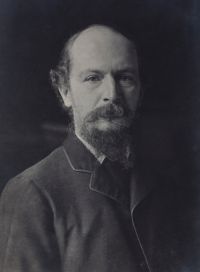
Portrait of Algernon Charles Swinburne Algernon Charles Swinburne The Heptalogia — Last Words of a Seventh-Rate Poet (1880)

Yes—I feel rather better. Man's life is a mull, at the best;
And the patent perturbator pills are like bullets of lead in my chest.
When a man's whole spirit is like the lost Pleiad, a blown-out star,
Is there comfort in Holloway, Bill? is there hope of salvation in Parr?
True, most things work to their end—and an end that the shroud overlaps.
Under lace, under silk, under gold, sir, the skirt of a winding-sheet flaps—
Which explains, if you think of it, Bill, why I can't, though my soul thereon broodeth,
Quite make out if I loved Lady Tamar as much as I loved Lady Judith.
Source: Wikisource

Portrait of Algernon Charles Swinburne Algernon Charles Swinburne The Heptalogia — Last Words of a Seventh-Rate Poet (1880)

In the shudder and swoon of the sickness of colour, the agonies old
That engirdle the brows of the day when he sinks with a spasm into rest
And the splash of his kingly blood is dashed on the skirts of the west,
Even such was my own, when I felt how much sharper than any snake's tooth
Was the passion that made me mistake Lady Eve for her niece Lady Ruth.
The whole world, colourless, lapsed. Earth fled from my feet like a dream
Source: Wikisource

Portrait of Algernon Charles Swinburne Algernon Charles Swinburne The Heptalogia — Last Words of a Seventh-Rate Poet (1880)

Flowing and ebbing and flowing all night to a weary tune
('Such as that of my verses'? Get out!) in the face of a sick-souled moon.
The keen stars kindled and faded and fled, and the wind in my ears
Was the wail of a poet for failure—you needn't come snivelling tears
And spoiling the mixture, confound you, with dropping your tears into that!
I know I'm pathetic—I must be—and you soft-hearted and fat,
And I'm grateful of course for your kindness—there, don't come hugging me, now—
But because a fellow's pathetic, you needn't low like a cow.
Source: Wikisource

Get perspective with Kwize: daily news enlightened by great literature