Summary

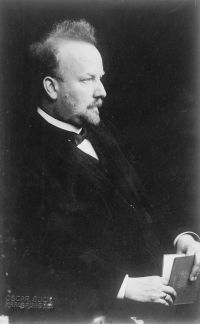
Portrait of Arthur Drews Arthur Drews The Witnesses to the Historicity of Jesus… (1912)

The name in the text is not “Christus,” but “Chrestus” (and in some manuscripts Cherestus) , which is by no means the usual designation of Jesus, while it is a common name, especially among Roman freedmen. Hence the whole passage in Suetonius may have nothing whatever to do with the question of Christianity. It may just as well refer to any disturbances whatever caused among the Jews by a man named Chrestus, and it does not say much for the “scientific” spirit of theologians when they interpret it in their own sense without further ado.
Source: Wikisource

Portrait of Arthur Drews Arthur Drews The Witnesses to the Historicity of Jesus… (1912)

What has been said on the subject up to the present is merely frivolous, adapted only to an utterly thoughtless circle of readers or hearers. Yet even a man like Jülicher does not hesitate to quote Pliny among the profane witnesses. He also mentions Marcus Aurelius, who expresses his anger against the Christians in his Meditations (about the year 175!) , and assures us that what is meant there by Christianity is the community of those who believed in the Jesus of our and their gospels as their God and Saviour (p. 17) .
Source: Wikisource

Portrait of Arthur Drews Arthur Drews The Witnesses to the Historicity of Jesus… (1912)

An attempt has been made to connect the passage in Suetonius with the messianic expectation of the Jews, and to interpret it in the sense of referring either to quarrels in the Jewish community at Rome owing to the belief of those who held that Jesus was the Messiah they all expected, or to a general agitation of Roman Judaism on account of its messianic ideas and hostility to the pagan world.
Source: Wikisource

Get perspective with Kwize: daily news enlightened by great literature