Summary

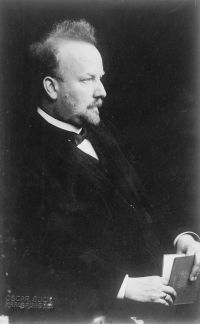
Portrait of Arthur Drews Arthur Drews The Witnesses to the Historicity of Jesus… (1912)

None but a theological historian would venture to use such an argument, and it is lamentable that he should find any support on the side of profane historians. As if one could settle a priori the limits of the human faculty of invention! As if the figure of Jesus in the gospels stood really apart from comparison with any others! If religious-historical inquiry has told us anything, it has shown that this is the reverse of the truth. The Saviour of the gospels is paralleled by other redeeming divinities, whom he resembles so closely at times as to be identical with them.
Source: Wikisource

Portrait of Arthur Drews Arthur Drews The Witnesses to the Historicity of Jesus… (1912)

Indeed, in many and important points we recognise a human personality in the saviours of the non-Judaic religions, and the more research advances in that field the clearer it becomes that the separate features of the figure of Jesus have their counterpart, partly in ancient mythology, partly and especially in the Old Testament, and thus it is absurd to say that they could not be invented.
Source: Wikisource

Portrait of Arthur Drews Arthur Drews The Witnesses to the Historicity of Jesus… (1912)

Even a theologian like Paul W. Schmiedel acknowledges: “For my part I never claim that Jesus was unique; it either means nothing at all, since every man is unique, or it may seem to affirm too much.” [1] And the historian Seeck observes that every man has his like, and therefore there are no unique personalities in the sense in which theologians use the word here. [2] Faust, Hamlet, Lear, and Caliban, and their like, are unique; are they therefore historical personalities?
The great point, however, is that the figure of Jesus, as it is described in the gospels, “could not have been invented.”
Source: Wikisource

Get perspective with Kwize: daily news enlightened by great literature