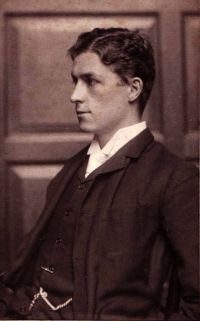
Arthur Llewelyn Davies

Arthur Llewelyn Davies

Summary

Portrait of Arthur Llewelyn Davies Arthur Llewelyn Davies 1911 Encyclopædia Britannica (1911)

Unless the judge decides that there is no duty to take care, or that there is no evidence of want of care, the question of negligence or no negligence is wholly for the jury.
Ordinarily a man is responsible only for his own negligence and for that of his servants and agents acting within the scope of their authority. For the acts or defaults of the servants of an independent contractor he is not liable.
Source: Wikisource

Portrait of Arthur Llewelyn Davies Arthur Llewelyn Davies 1911 Encyclopædia Britannica (1911)

In order to establish civil liability on the ground of negligence, three things must be proved—a duty to take care, the absence of due care, and actual damage caused directly by the absence of due care. Mere carelessness gives no right of action unless the person injured can show that there was a legal duty to take care. The duty may be to the public in general, on the ground that any person who does anything which may involve risk to the public is bound to take due care to avoid the risk.
Source: Wikisource

Portrait of Arthur Llewelyn Davies Arthur Llewelyn Davies 1911 Encyclopædia Britannica (1911)

So too any person who undertakes a work likely to cause danger if due care is not taken is liable for damage caused by the carelessness of the servant of an independent contractor, so long as the carelessness is not casual or collateral to the servant’s employment.
In an action of negligence a familiar defence is “contributory negligence.” This is a rather misleading expression. It is not a sufficient defence to show that the plaintiff was negligent, and that his negligence contributed to the harm complained of.
Source: Wikisource

Get perspective with Kwize: daily news enlightened by great literature