Summary

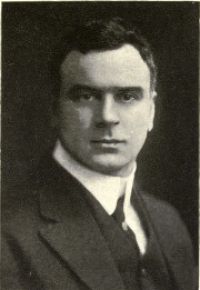
Portrait of Arthur Stringer Arthur Stringer The Loom of Destiny — Thicker than Water (1899)

This Georgie, with much fear and stammering, actually did.
"What—what's this the youngster is trying to get at?" said Georgie's Uncle Charley, looking up over his paper when the questions were timidly put to him. "American Revolution? Bah, all rot, boy, all rot! The American Revolution was won right in England—sympathy of the great middle classes of the home country! But, dear me, child, you can't understand those things! What's that? War of 1812? No, sir," thundered Georgie's Uncle Charley, in his good British wrath, "no, sir, it was not won by America.
Source: Wikisource

Portrait of Arthur Stringer Arthur Stringer The Loom of Destiny — Thicker than Water (1899)

When he had first been told that he was going to New York for three whole months, they—that is, Georgie and his family—were living down near Weymouth. So day after day he used to stand on the Channel cliffs and look out at the great ships passing back and forth and wonder just which ones were going to America,—America the wonderful, the unknown,—and just how long it would take them, and if it was really true that the world was round, and that though they kept on and on and on for ever they could never come to where the sun went down over the edge of Everything.
Source: Wikisource

Portrait of Arthur Stringer Arthur Stringer The Loom of Destiny — Thicker than Water (1899)

Then all of a sudden a piece of mud hit Mary Edith on the ear.
"That's Freckles," said Mary Edith, quietly. And the next moment a very freckled face appeared slowly above the top of the board fence. It was followed by a very lanky boy, who, after throwing another piece of mud at Mary Edith, turned a handspring over the top of the paling and nearly fell over Georgie in landing.
"This is Freckles, Georgie," said Mary Edith, casually. "He lives in our house with us. He's not English, you know; he's only an American boy."
Source: Wikisource

Get perspective with Kwize: daily news enlightened by great literature