Summary

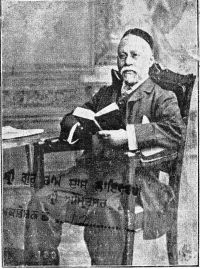
Portrait of Behramji Malabari Behramji Malabari Gujarát and the Gujarátis — En Route to Ahmedabad (1882)

The train stopped at a certain station again, and the Bania prepared to alight. He first handed over his kit to the porter, then that ugly boy of his, so very leisurely, that before he found time to drag his own carcass out, the engine gave the whistle. The Bania's wife, who had just issued from one of the third-class carriages, gave a shriek on seeing her lord's danger. The man turned pale and yellow by turns. Meantime half a dozen Parsi officials rushed to his assistance. "Come to my arms," said one ugly fat fellow to the Bania.
Source: Wikisource

Portrait of Behramji Malabari Behramji Malabari Gujarát and the Gujarátis — En Route to Ahmedabad (1882)

Those who pleaded inability were deprived of their tools, and thus left without the means of earning a livelihood. Some Hindus, whose business it is to weigh loads of fuel or other things, were taxed Rs. 40 a year, and are now taxed Rs. 260 a year! On one bale of tobacco the Desái exacts Rs. 21. From the Mussalman weavers he takes fifty yards of the cloth they weave. Some years ago the Desái had a nautch [4] party, and he wanted cloth for a pavilion.
Source: Wikisource

Portrait of Behramji Malabari Behramji Malabari Gujarát and the Gujarátis — En Route to Ahmedabad (1882)

If this be so, nothing could be more reprehensible even in the Guicowár territory. But getting over all these cruel hindrances, the writer in the Gujarát Mitra has been able to record the following disclosures made in the course of inquiry. The facts may convey some idea of the desperation into which the poor people have been driven:—Parsi shopkeepers of Gandevi deposed that the Desái has been, for years, exacting from each Rs. 51 a year. Parsi boat-builders of the same place have been paying the Desái Rs. 5 on every craft prepared, besides fuel, timber, &c.
Source: Wikisource

Get perspective with Kwize: daily news enlightened by great literature