Summary

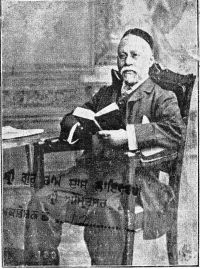
Portrait of Behramji Malabari Behramji Malabari Gujarát and the Gujarátis — Shett Jamál Gotá… (1882)

And honest editors immortalise the virtues of Jamál Gotá, Esquire, Justice of the Peace, Khán Báhádur, "our great philanthropist," whom they know to have been an undutiful son, a wicked husband, an unnatural parent, a false friend, so worse than brutal in selfishness, that the veriest brute would have blushed for him had Jamál Gotá been assigned the place in creation which he so richly deserves.
Source: Wikisource

Portrait of Behramji Malabari Behramji Malabari Gujarát and the Gujarátis — Shett Jamál Gotá… (1882)

This, with a couple of bungalows, is all that is now left to Khán Báhádur Jamál Gotá. He now leads a retired life, away from his family, whom he has altogether discarded. But, indulgent father as he is, he has still "kept his son's saláms," he explains to friends—that is, once a year his sons go to salám him from a distance, in the faint hope of getting a hundred or two from the natural wretch. Vain, vain is the hope. The father is a thief and a traitor, developing a degree of selfishness which is absolutely fiendish.
Source: Wikisource

Portrait of Behramji Malabari Behramji Malabari Gujarát and the Gujarátis — Shett Jamál Gotá… (1882)

Why should they go to school like poor people? Had they not every blessing of life—a generous parent, fine handsome wives, and a number of children? Was he not feeding them all? It was no use arguing with the man. The sons then went to the Collector who had made Jamál Gotá a Khán Báhádur, and said, "Sir, we are starving; give us to eat."
Source: Wikisource

Get perspective with Kwize: daily news enlightened by great literature