Summary

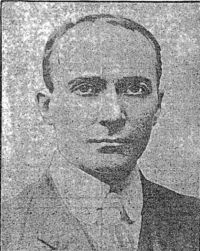
Portrait of Carlo de Fornaro Carlo de Fornaro White Lotus, the legend of the cat's eye (1901)

Now the Ruler of the gods knew well enough that the Princess was unapproachable by men, no matter how exalted their rank. As a God he was invisible to mankind; therefore, to the great shock and indignation of the other gods and his wife Indrani, he took the incarnation of a beautiful Angora cat, as fluffy and delicate as a cotton puff, immaculately white, with a bushy tail, gray-green eyes, very bristling mustachios and a nose pink as a rose coral bead.
Source: Gutenberg

Portrait of Carlo de Fornaro Carlo de Fornaro White Lotus, the legend of the cat's eye (1901)

When she grew tired of caressing and playing with him she would order her servants to bring one of her large jewel-chests. Out of it she would choose a bracelet for the slender neck of White Lotus. One day it might be a bracelet inlaid with pearls, the next day perhaps one of rubies, the following emeralds, and then endless combinations and designs with the most astonishing variety of precious stones and gems, in rotation, for three hundred and sixty-five days in the year; and never did White Lotus wear the same ornament more than once.
Source: Gutenberg

Portrait of Carlo de Fornaro Carlo de Fornaro White Lotus, the legend of the cat's eye (1901)

With a lover’s intuition he had divined who was to blame for this insidious vengeance which was intended to wound him mortally.
After fruitless deliberation, he quickly ascended the highest tower in the palace, and from there demanded obedience from the mutinous gods; but he was only derided; then he invoked their kindness and mercy.
After a long silence a clear voice rang out from the sky above him: “Sacrifice for sacrifice, weep seven times as the sun goes up and as the sun goes to rest, and those tears will save the Princess....”
Source: Gutenberg

Get perspective with Kwize: daily news enlightened by great literature