Summary

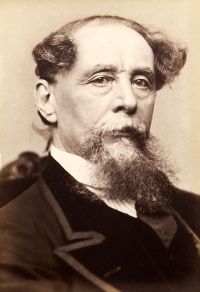
Portrait of Charles Dickens Charles Dickens Sketches by Boz — Shabby-genteel people (1836)

Now, shabby people, God knows, may be found anywhere, and genteel people are not articles of greater scarcity out of London than in it; but this compound of the two—this shabby-gentility—is as purely local as the statue at Charing-cross, or the pump at Aldgate. It is worthy of remark, too, that only men are shabby-genteel; a woman is always either dirty and slovenly in the extreme, or neat and respectable, however poverty-stricken in appearance. A very poor man, ‘who has seen better days,’ as the phrase goes, is a strange compound of dirty-slovenliness and wretched attempts at faded smartness.
Source: Wikisource

Portrait of Charles Dickens Charles Dickens Sketches by Boz — Shabby-genteel people (1836)

There he used to sit all day, as close to the table as possible, in order to conceal the lack of buttons on his coat: with his old hat carefully deposited at his feet, where he evidently flattered himself it escaped observation.
About two o’clock, you would see him munching a French roll or a penny loaf; not taking it boldly out of his pocket at once, like a man who knew he was only making a lunch; but breaking off little bits in his pocket, and eating them by stealth. He knew too well it was his dinner.
Source: Wikisource

Portrait of Charles Dickens Charles Dickens Sketches by Boz — Shabby-genteel people (1836)

Whether our readers have noticed these men, in their walks, as often as we have, we know not; this we know—that the miserably poor man (no matter whether he owes his distresses to his own conduct, or that of others) who feels his poverty and vainly strives to conceal it, is one of the most pitiable objects in human nature. Such objects, with few exceptions, are shabby-genteel people.
Source: Wikisource

Get perspective with Kwize: daily news enlightened by great literature