Summary

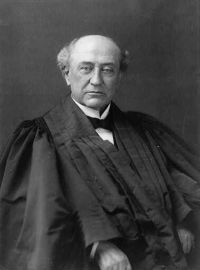
Portrait of David Josiah Brewer David Josiah Brewer John Jenkins v. — Opinion of the Court

If the language of the legislature is satisfied, has full scope and effect, without reading into it either a grant or a recognition of corporate life or power, neither will be implied. And here so clear is it that the legislature was not contemplating the grant or recognition of any hitherto unauthorized power to loan, discount, or purchase paper, but had simply the thought of giving equality in the matter of interest and usury, that it is inadmissible to hold that thereby an additional power, either of loan or discount or purchase, was given to trust companies.
Source: Wikisource

Portrait of David Josiah Brewer David Josiah Brewer John Jenkins v. — Opinion of the Court

In order to pronounce this provision of the law invalid we must, therefore, convict the legislature, not alone of hostility to the national banks, but of hostility toward its own creations; we must reach the conclusion that the state of New York is seeking, by an exercise of its taxing power, to advance one class of moneyed corporations at the expense of another, both of which have been created by the legislature, and both of which are engaged, presumptively, in promoting the interests of the people.
Source: Wikisource

Portrait of David Josiah Brewer David Josiah Brewer John Jenkins v. — Opinion of the Court

So it is not suggested that the state makes any discrimination between state banks and national banks, but it is contended that the statutes of New York, in reference to the taxation of trust companies, are essentially different; that these trust companies are practically carrying on a banking business; that an enormous amount of moneyed capital is invested in them, and that as a result not merely a theoretical, but a practical and burdensome, discrimination is made against the moneyed capital invested in national banks.
Source: Wikisource

Get perspective with Kwize: daily news enlightened by great literature