Summary

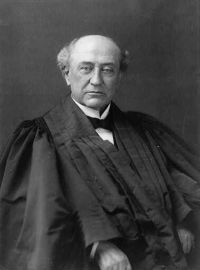
Portrait of David Josiah Brewer David Josiah Brewer Romig v. Gillett — Opinion of the Court

The foreclosure was a proceeding in equity, although its various steps were prescribed by statute. Equitable principles must control the measure of relief. Even if the publication had been founded upon an affidavit perfect in form, and the decree and all proceedings had been in strict conformity to the statute, yet, by § 3955, the defendant would be let in to defend, upon compliance with certain conditions.
Source: Wikisource

Portrait of David Josiah Brewer David Josiah Brewer Romig v. Gillett — Opinion of the Court

Under § 4498 the appellant Harding has all the rights of an occupying claimant, for he was 'in quiet possession, claiming title and holding under a sale and conveyance made in pursuance of a decree in chancery, where lands have been directed to be sold, and the purchasers thereof have obtained title to and possession of the same without any fraud or collusion.' Of course, this section applies to proceedings which are defective, for, if not defective, by § 3955 a purchaser in good faith has title, and cannot be evicted upon any terms.
Source: Wikisource

Portrait of David Josiah Brewer David Josiah Brewer Romig v. Gillett — Opinion of the Court

Assuming that that section is not fully applicable because of the defect in the affidavit, yet the appellee comes into a court of equity seeking relief against the foreclosure of a mortgage. In such a case there are almost always certain conditions of relief. If the mortgage be valid the rights of the mortgagee and those claiming under him are to be protected. Generally, such rights are protected by requiring payment of the mortgage debt, and granting a right of redemption. It is true that this right of redemption is a favored right.
Source: Wikisource

Get perspective with Kwize: daily news enlightened by great literature