Summary

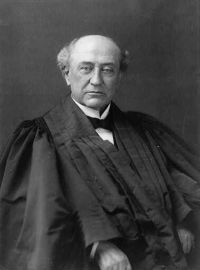
Portrait of David Josiah Brewer David Josiah Brewer Wyman v. Wallace — Opinion of the Court

But that decision did not at all impugn the wisdom or bona fides of the transaction by which the money was obtained to pay off the pressing demands of the American bank. The question, therefore, is, whether a national bank, finding itself embarrassed, with a large amount of assets, much in excess of its obligations, yet without the cash to make payment of those which are due and urgent, can borrow to meet those pressing demands. A very natural answer is, why not? It is not borrowing money to engage in a new business. It simply exchanges one creditor for others.
Source: Wikisource

Portrait of David Josiah Brewer David Josiah Brewer Wyman v. Wallace — Opinion of the Court

There may be wisdom in consolidating all its debts into the hands of one person. At least such a consolidation cannot be pronounced beyond its powers. When time is obtained by the new indebtedness (in this case a year) it gives the borrowing bank and its officers and stockholders time to consider and determine the wisdom of attempting a further prosecution of business. In the case of an individual it would be a legitimate and often a wise transaction.
Source: Wikisource

Portrait of David Josiah Brewer David Josiah Brewer Wyman v. Wallace — Opinion of the Court

Stat. 1901, p. 3503) , reads: 'Any [national banking] association may go into liquidation and be closed by the vote of its shareholders owning two thirds of its stock.'
By § 5151, Rev. Stat. (U.S.C.omp. Stat. 1901, p. 3465) , stockholders in national banks are made liable for 'all contracts, debts, and engagements of such association, to the extent of the amount of their stock therein, at the par value thereof, in addition to the amount invested in such shares.' Section 2 of the act of June 30, 1876 (19 Stat. at L. 63, chap. 156, U.S.C.omp. Stat. 1901, p. 3509) , is as follows:
'Sec. 2.
Source: Wikisource

Get perspective with Kwize: daily news enlightened by great literature