Summary

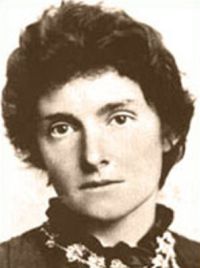
Portrait of E. Nesbit E. Nesbit Daphne in Fitzroy Street — XVII … (1909)

Hilaire who renders you happy?” he asked in his pitiful, pitiless, Russian way, “or is it that you have seen this dear Henry?”
“Neither,” said Daphne—“It is you who make me happy. You are so kind and you were glad to see me, and——”
“I should wish,” he said slowly, “to render you always happy. All the world I would render happy if I could, and you more than all the world.”
“I wonder,” she said, on an impulse, “whether everyone who has suffered is like you.”
Source: Wikisource

Portrait of E. Nesbit E. Nesbit Daphne in Fitzroy Street — XVII … (1909)

Henry has been here,” said Daphne; “he said he was sorry not to see you, but time was time and light was light.”
“Alas, this dear Henry,” said Vorontzoff, bundling down the parcels among the litter on the model’s throne, “ah, there is a genius par exemple, Monsieur St. Hilaire, a true genius. When we have our little expositiondejeunerthen the world will know what genius it has ignored.”
“I’m afraid I haven’t much faith in ignored geniuses,” St. Hilary said. “If a man’s worth anything the world knows it.”
“Poof!” The Russian snapped his fingers immediately under the other’s nose.
Source: Wikisource

Portrait of E. Nesbit E. Nesbit Daphne in Fitzroy Street — XVII … (1909)

One's life, then, it seemed, was to be spent in answering questions about letters—her own or another’s.
“I wrote,” he said, “many times.”
“I never had your letters.”
“Then you must have thought—oh, princess, what must you have thought?”
“I never,” said Daphne, very deliberately, “thought about you at all.”
“That,” said he, troubled now as much as she, “is not true. Why are you saying things that are not true?”
“Do sit down,” she said, indicating a remote chair over which a red robe lay. If He should come in, and find this man hanging over her—what might he not think?
Source: Wikisource

Get perspective with Kwize: daily news enlightened by great literature