Summary

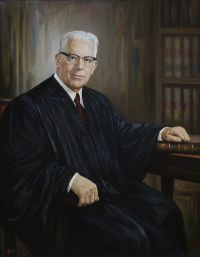
Portrait of Earl Warren Earl Warren Kesler v. Department of Public Safety of Utah…

However, where the State relinquishes its right to demand that prior judgments be paid, and in its place authorizes the creditor, through giving or withholding his consent to determine whether the judgment debtor may be restored to his driving privileges, the purposes of the financial-responsibility laws are no longer being served. Instead of the legitimate determination to keep all negligent financially irresponsible drivers off the highways, the State is, ostensibly through its police power, giving the creditor a powerful collection device for recovery of a discharged debt.
Source: Wikisource

Portrait of Earl Warren Earl Warren Kesler v. Department of Public Safety of Utah…

The essential inquiry in a case such as this is not only whether the State has acted in a field in which it has a legitimate interest to achieve goals inherent in its police power. Rather, our task is also to ascertain whether the provisions of the state act are compatible with the policy expressed in the federal legislation with which the state law is alleged to be in conflict. [17] If there is no escape from a finding of incompatibility, the Supremacy Clause of the United States Constitution demands that the conflicting state law and policy must yield to the federal statute.
Source: Wikisource

Get perspective with Kwize: daily news enlightened by great literature