Summary

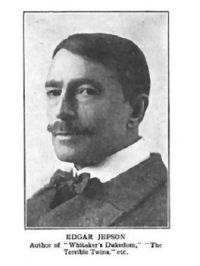
Portrait of Edgar Jepson Edgar Jepson The Garden at No. 19 — Chapter 9 (1910)

I was really glad to have the talisman for Pamela. It sounds silly, doubtless, even barbarous. It will probably seem absurd to most men to be glad, in the twentieth century, to have a talisman. But then all the crude scientific notions, which are a part of the unconscious equipment of the twentieth century mind, had in my case been severely shaken.
Source: Wikisource

Portrait of Edgar Jepson Edgar Jepson The Garden at No. 19 — Chapter 9 (1910)

For his part, he held that the true talisman was of the nature of a sacrament; it was an affirmation of a man's will, his protective will, just as sticking pins into the wax figure of an enemy, to destroy him, was an affirmation of his malefic will. If his will to destroy were strong enough, that action might, in some way which passed our understanding, work injury. If a man's will to protect were strong enough, the affirmation of it, the crystallization of it, as it were, in the making of a talisman might work good.
Source: Wikisource

Portrait of Edgar Jepson Edgar Jepson The Garden at No. 19 — Chapter 9 (1910)

Once I even fancied that there were creatures on the lawn, and twice I fancied that the statue itself was looking at me—it's terribly alive."
"You might fancy anything, alone, at night, and expecting something to happen. But whatever you do, don't go and raise Pan. You know that the sight of Pan drove people mad."
Source: Wikisource

Get perspective with Kwize: daily news enlightened by great literature