Summary

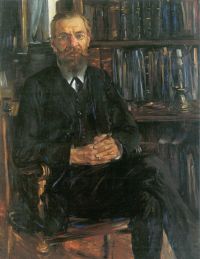
Portrait of Eduard Meyer Eduard Meyer 1911 Encyclopædia Britannica, Volume 13… (1911)

Hormizd protected the common people and introduced a severe discipline in his army and court. When the priests demanded a persecution of the Christians, he declined on the ground that the throne and the government could only be safe if it gained the goodwill of both concurring religions. The consequence was that he raised a strong opposition in the ruling classes, which led to many executions and confiscations. When he came to the throne he killed his brothers, according to the oriental fashion.
Source: Wikisource

Portrait of Eduard Meyer Eduard Meyer 1911 Encyclopædia Britannica, Volume 13… (1911)

Tyr. 2, where Nöldeke has corrected the name Odomastes into Oromastes, i.e. Hormizd) . In the Persian tradition of the history of Ardashir I., preserved in a Pahlavi text (Nöldeke, Geschichte des Artachsir I. Pāpakān) , he is made the son of a daughter of Mithrak, a Persian dynast, whose family Ardashir had extirpated because the magians had predicted that from his blood would come the restorer of the empire of Iran. Only this daughter is preserved by a peasant; Shapur sees her and makes her his wife, and her son Hormizd is afterwards recognized and acknowledged by Ardashir.
Source: Wikisource

Get perspective with Kwize: daily news enlightened by great literature