Summary

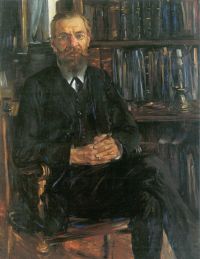
Portrait of Eduard Meyer Eduard Meyer 1911 Encyclopædia Britannica, Volume 24… (1911)

A great many Greek authors were born here (e.g. the Stoic Diogenes of Babylonia, 2nd century) , though the inhabitants of Seleucia in Babylonia generally are simply called Babylonians by the Greeks. In the time of Pliny the town was said to have 600,000 inhabitants (vi. 122) . Seleucia suffered from the rebellion of the satrap Molon of Media, who was put down by Antiochus III. the Great in 220 (Polyb. v. 54) . Antiochus IV. Epiphanes once more restored the Seleucid supremacy in the east; but after his death (163) the decay of the empire began and was accelerated by the intrigues of the Romans.
Source: Wikisource

Portrait of Eduard Meyer Eduard Meyer 1911 Encyclopædia Britannica, Volume 24… (1911)

Trajan occupied Seleucia in 116. In the war of Marcus Aurelius and L. Verus against the Parthians, Seleucia was taken by Avidius Cassius in 164, and then the. Romans did what the Parthians had not dared to do: they burnt down the great Greek town with 300,000 inhabitants (Dio Cass. lxxi. 2; Zonar, xii. 2; Capitol. Vit. Veri, 8; Eutrop. 8. 10; Ammian. Marc. xxiii. 6. 24; xxiv. 5. 3) . The great plague, which laid waste the Roman empire during the next years, is said to have sprung from the ruins of Seleucia. The destruction of Seleucia may be considered as the end of Hellenism in Babylonia.
Source: Wikisource

Get perspective with Kwize: daily news enlightened by great literature