Summary

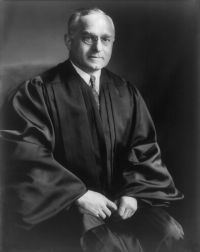
Portrait of Felix Frankfurter Felix Frankfurter Railway Employes' Department v…

I quite agree that the question what and how much good labor unions do, is one on which intelligent people may differ; I think that laboring men sometimes attribute to them advantages, as many attribute to combinations of capital disadvantages, that really are due to economic conditions of a far wider and deeper kind; but I could not pronounce it unwarranted if Congress should decide that to foster a strong union was for the best interest, not only of the men, but of the railroads and the country at large.' 208 U.S. at pages 191-192, 28 S.Ct.
Source: Wikisource

Portrait of Felix Frankfurter Felix Frankfurter Railway Employes' Department v…

There the railroads, to repeat, successfully resisted an Act of Congress which outlawed what colloquially became known as the 'yellow-dog contract.' We are now asked to declare it beyond the power of Congress to authorize railroads to enter into voluntary agreements with the unions to which the overwhelming proportion of railway employees belong whereby all their workers are required to belong to such unions, provided, of course, that the unions be open unions, i.e., that membership in the unions be available on ordinary, appropriate terms.
Source: Wikisource

Portrait of Felix Frankfurter Felix Frankfurter Railway Employes' Department v…

The change in the Court's understanding of industrial problems, certainly as they affect railroads, in their bearing upon the country's commerce and all that thereby hangs, to no small degree reflected the changed attitude of the railroads towards the role of railroad labor unions in the discharge of the functions of railroads. As striking evidence as any of this important shift in opinion is the fact that the Railway Labor Act of 1926 came on the statute books through agreement between the railroads and the railroad unions on the need for such legislation.
Source: Wikisource

Get perspective with Kwize: daily news enlightened by great literature