Summary

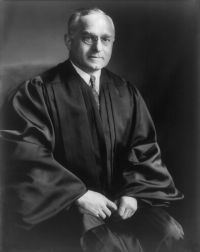
Portrait of Felix Frankfurter Felix Frankfurter Sherman v. United States (356 U.S. 369…

It is surely sheer fiction to suggest that a conviction cannot be had when a defendant has been entrapped by government officers or informers because 'Congress could not have intended that its statutes were to be enforced by tempting innocent persons into violations.' In these cases raising claims of entrapment, the only legislative intention that can with any show of reason be extracted from the statute is the intention to make criminal precisely the conduct in which the defendant has engaged.
Source: Wikisource

Portrait of Felix Frankfurter Felix Frankfurter Sherman v. United States (356 U.S. 369…

A contrary view runs afoul of fundamental principles of equality under law, and would espouse the notion that when dealing with the criminal classes anything goes. The possibility that no matter what his past crimes and general disposition the defendant might not have committed the particular crime unless confronted with inordinate inducements, must not be ignored. Past crimes do not forever outlaw the criminal and open him to police practices, aimed at securing his repeated conviction, from which the ordinary citizen is protected.
Source: Wikisource

Portrait of Felix Frankfurter Felix Frankfurter Sherman v. United States (356 U.S. 369…

A false choice is put when it is said that either the defendant's conduct does not fall within the statute or he must be convicted. The statute is wholly directed to defining and prohibiting the substantive offense concerned and expresses no purpose, either permissive or prohibitory, regarding the police conduct that will be tolerated in the detection of crime. A statute prohibiting the sale of narcotics is as silent on the question of entrapment as it is on the admissibility of illegally obtained evidence.
Source: Wikisource

Get perspective with Kwize: daily news enlightened by great literature