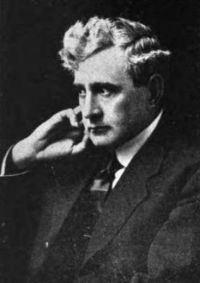
Forrest Crissey

Forrest Crissey

Summary

Portrait of Forrest Crissey Forrest Crissey A Sermon and a Sinner (1907)

The presence among them of a man standing knee-deep in a grave which he was digging gave the child a keen shock. Death! And on such a morning as this! At all times terrible, its shadow on the peace of this Sabbath morning made him shiver. He counted the shovelfuls of earth the sexton threw upon the slowly growing mound at his side.
How many shovelfuls would it take to empty the grave? Who were they going to put in that black hole? Was it one who had died a Christian? When would they dig his—Ezra Rue's—grave? Was he a Christian? And all the time he counted the shovelfuls of earth!
Source: Wikisource

Portrait of Forrest Crissey Forrest Crissey A Sermon and a Sinner (1907)

Let this death be a solemn admonition to all—but especially to the young—that Death may pass the aged and lay his hand upon the child. The youth may be nearer the grave than those full of years; he must make his peace with God and accept mercy while it is offered to-day—or death may overtake him in his sins!"
Ezra drifted out with the ebbing tide which filled the aisles—so dazed that his mother pushed him gently forward, in a perfunctory way, as she exchanged nods of recognition with those about her.
Source: Wikisource

Portrait of Forrest Crissey Forrest Crissey A Sermon and a Sinner (1907)

The reading class recited in droning tones, and even Miss Albright seemed inoculated with the dreamy indolence of the day, for she listened with a far-away look in her eyes and was strangely indifferent to the blundering singsong rendering of "The Queen of the May."
But instead of lulling Ezra to peace, the day awakened his sensibilities to a painful extreme. The stillness seemed tense and oppressive—surcharged with some tremendous, mysterious excitement. What could be about to happen so great that the earth must hold its breath? What if the world should come to an end?
Source: Wikisource

Get perspective with Kwize: daily news enlightened by great literature