Summary

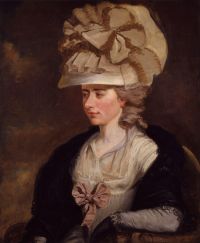
Portrait of Frances Burney Frances Burney Cecilia — Book 1/Chapter ii: AN ARGUMENT (1782)

Taking her hand, "I suppose," he said, "you will not permit an old friend to visit you in town, lest the sight of him should prove a disagreeable memorial of the time you will soon regret having wasted in the country?"
"Why will you say this, Mr Monckton?" cried Cecilia; "I am sure you cannot think it."
"These profound studiers of mankind, madam," said Belfield, "are mighty sorry champions for constancy or friendship. They wage war with all expectations but of depravity, and grant no quarter even to the purest designs, where they think there will be any temptation to deviate from them."
Source: Wikisource

Portrait of Frances Burney Frances Burney Cecilia — Book 1/Chapter ii: AN ARGUMENT (1782)

Miss Bennet, the lady, was in every sense of the phrase, the humble companion of Lady Margaret; she was low-born, meanly educated, and narrow-minded; a stranger alike to innate merit or acquired accomplishments, yet skilful in the art of flattery, and an adept in every species of low cunning. With no other view in life than the attainment of affluence without labour, she was not more the slave of the mistress of the house, than the tool of its master
Source: Wikisource

Portrait of Frances Burney Frances Burney Cecilia — Book 1/Chapter ii: AN ARGUMENT (1782)

Among the gentlemen, the most conspicuous, by means of his dress, was Mr Aresby, a captain in the militia; a young man who having frequently heard the words red-coat and gallantry put together, imagined the conjunction not merely customary, but honourable, and therefore, without even pretending to think of the service of his country, he considered a cockade as a badge of politeness, and wore it but to mark his devotion to the ladies, whom he held himself equipped to conquer, and bound to adore.
Source: Wikisource

Get perspective with Kwize: daily news enlightened by great literature