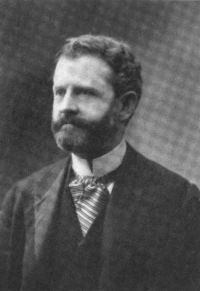
Francis Whiting Halsey

Francis Whiting Halsey

Summary

Portrait of Francis Whiting Halsey Francis Whiting Halsey The Old New York Frontier — Part 1… (1901)

The Empire State, as you love to call it, was once laced by our trails from Albany to Buffalo – trails that we had trod for centuries – trails worn so deep by the feet of the Iroquois that they became your roads of travel, as your possessions gradually eat into those of my people. Your roads still traverse those same lines of communication which bound one part of the Long House to the other.
Source: Wikisource

Portrait of Francis Whiting Halsey Francis Whiting Halsey The Old New York Frontier — Part 1… (1901)

In 1683 the Indians called the river "the Kill which falls into the Susquehanna." The stream had obviously at that time received no name. Near Afton, on an island, was a village called Cunahunta, a word sometimes written Conihunto, and Gunnegunter, but most important of all these Indian settlements was Oghwaga, [6] where at the time of the Revolution existed the largest Indian town in the valley, with an orchard, a church, a fort, and many other signs of civilization.
Source: Wikisource

Portrait of Francis Whiting Halsey Francis Whiting Halsey The Old New York Frontier — Part 1… (1901)

Into the most dis-tant regions the tribes of the Iroquois from the ear-liest ages had gone over this highway of their own building for purposes of war, plunder, and pleasure. Along the banks of this stream trails had been deeply worn by red men’s feet. Generations had passed over them, and the white man, coming later, put them to use before constructing roads of his own. In many cases the white man’s roads were actually built by widening the trails, as was the case with the present road from Sidney to Unadilla on the northern side of the river and the main thorough-fare of Oneonta.
Source: Wikisource

Get perspective with Kwize: daily news enlightened by great literature