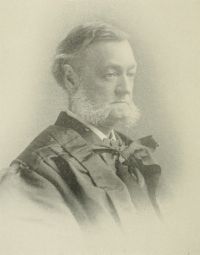
 George Shiras, Jr.,
Credits Commutation Company v. United States…
George Shiras, Jr.,
Credits Commutation Company v. United States…
“ It seems to be the theory of the petitioners that, under the provisions of the act of Congress, they have a right to connect their railroads, now or to be constructed, with the railroad of the Union Pacific Railway Company, and that they have, therefore, a right to intervene in the foreclosure proceedings, in order to protect their right to so connect and to protect the right of the public in such railroad connections.As heretofore stated, the circuit court denied the petitions for leave to the intervene, and upon appeal to the circuit court of appeals that court dismissed the appeals. ”
