Summary

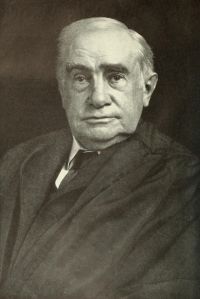
Portrait of Henry Billings Brown Henry Billings Brown Flint v. Christall/Dissent Brown…

While I freely concede that the owner of a ship is not by the general maritime law entitled to a general average contribution where the loss is occasioned by the fault of the master or crew, I regard the third section of the Harter act as introducing a new feature into the law of carriage by sea, and as eliminating altogether the question of negligence in navigation.
Source: Wikisource

Portrait of Henry Billings Brown Henry Billings Brown Flint v. Christall/Dissent Brown…

In delivering the opinion, Sir James Hannen, president, observed: 'The claim for contribution as general average cannot be maintained where it arises out of any negligence for which the ship owner is responsible; but negligence for which he is not responsible is as foreign to him as to the person who has suffered by it. The loss would not have fallen upon the ship owner, and the expenditure or sacrifice made by him is not made to avert loss from himself alone, but from the cargo owner.' The case of Strang v.
Source: Wikisource

Portrait of Henry Billings Brown Henry Billings Brown Flint v. Christall/Dissent Brown…

As the steamer Irrawaddy was stranded on the coast of New Jersey, confessedly by the negligent navigation of her master, it will not be contended that she or her owners became liable to the owners of the cargo for any damages thereby occasioned. It is said, however, that, while the Harter act may be appealed to in defense of any action by the cargo against the ship, it is not available by the ship owner in a suit against the owners of the cargo for a contribution to the general average expenses occasioned by such stranding.
Source: Wikisource

Get perspective with Kwize: daily news enlightened by great literature