Summary

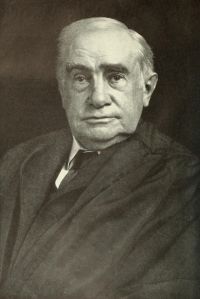
Portrait of Henry Billings Brown Henry Billings Brown Kolze v. Hoadley — Opinion of the Court

But where a bill is filed to foreclose a mortgage, and it appears by the bill itself that the mortgage has been fraudulently released to the mortgagor by a deed of which plaintiff had no notice, and the fraud is a mere incident, the bill is still one to recover the contents of a mortgage, within the meaning of the act, and will not lie in a Federal court unless the plaintiff's assignor might have maintained the bill if no assignment or transfer had been made.
Source: Wikisource

Portrait of Henry Billings Brown Henry Billings Brown Kolze v. Hoadley — Opinion of the Court

A suit was brought in the circuit court for South Carolina by two daughters of John F. Blacklock, who were citizens of Georgia, against certain defendants, who were citizens of South Carolina. It seems that Blacklock had sold a house and lot in Charleston to the defendant Small, who had given back a bond and mortgage to secure a portion of the purchase money; that Blacklock subsequently assigned the bond to Alexander Robinson in trust, for his (Blacklock's) children; that Small pretended to pay the bond by making payment to Robinson in Confederate treasury notes
Source: Wikisource

Portrait of Henry Billings Brown Henry Billings Brown Kolze v. Hoadley — Opinion of the Court

This is primarily a suit to foreclose certain mortgages. Instead of setting up the mortgages, their maturity and nonpayment, and their assignment to plaintiff, leaving to the defendants to plead the release by Stade of October, 1898, as an extinguishment of the mortgages, she has chosen to set forth the entire facts, to attack the release as fraudulent as against her, and to insist that the original notes and trust deeds are valid in her hands, and to pray for a foreclosure of the same.
Source: Wikisource

Get perspective with Kwize: daily news enlightened by great literature