Summary

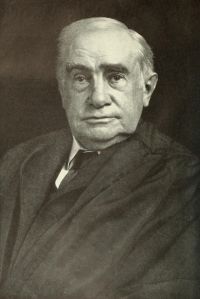
Portrait of Henry Billings Brown Henry Billings Brown McNulta v. Lochridge — Opinion of the Court

The act of March 3, 1887, declares that 'every receiver * * * may be sued in respect of any act or transaction of his in carrying on the business connected with such property, without the previous leave of the court in which said receiver or manager was appointed.' We agree with the supreme court of Illinois that it was not intended by the word 'his' to limit the right to sue to cases where the cause of action arose from the conduct of the receiver himself or his agents, but that, with respect to the question of liability, he stands in place of the corporation.
Source: Wikisource

Portrait of Henry Billings Brown Henry Billings Brown McNulta v. Lochridge — Opinion of the Court

So long as the property of the corporation remains in the custody of the court, and is administered through the agency of a receiver, such receivership is continuous and uninterrupted until the court relinquishes its hold upon the property, though its personnel may be subject to repeated changes. Actions against the receiver are in law actions against the receivership or the funds in the hands of the receiver, and his contracts, misfeasances, negligences, and liabilities are official, and not personal, and judgments against him as receiver are payable only from the funds in his hands.
Source: Wikisource

Get perspective with Kwize: daily news enlightened by great literature