Summary

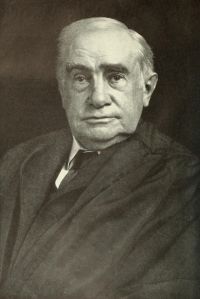
Portrait of Henry Billings Brown Henry Billings Brown Shiver v. United States — Opinion of the Court

While we hold in this case that, as between the United States and the settler, the land is to be deemed the property of the former, at least so far as is necessary to protect it from waste, we do not wish to be understood as expressing an opinion whether, as between the settler and the state, it may not be deemed the property of the settler, and therefore subject to taxation.
Source: Wikisource

Portrait of Henry Billings Brown Henry Billings Brown Shiver v. United States — Opinion of the Court

By analogy we think the settler upon a homestead may cut such timber as is necessary to clear the land for cultivation, or to build him a house, outbuildings, and fences, and, perhaps, as indicated in the charge of the court below, to exchange such timber for lumber, to be devoted to the same purposes, but not to sell the same for money, except so far as the timber may have been cut for the purpose of cultivation.
Source: Wikisource

Portrait of Henry Billings Brown Henry Billings Brown Shiver v. United States — Opinion of the Court

In this connection, it is said by Washburn in his work upon Real Property (volume 1, 1st Ed., p. 108) : 'In the United States, whether cutting of any kind of trees in any particular case is waste seems to depend upon the question whether the act is such as a prudent farmer would do with his own land, having regard to the land as an inheritance, and whether doing it would diminish the value of the land as an estate.'
'Questions of this kind have frequently arisen in those states where the lands are new and covered with forests, and where they cannot be cultivated until cleared of the timber.
Source: Wikisource

Get perspective with Kwize: daily news enlightened by great literature