Summary

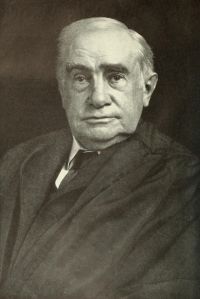
Portrait of Henry Billings Brown Henry Billings Brown Superior v. Ripley — Opinion of the Court

It needs no argument to show that the same rule would apply as between the acceptor and the payee, and, if the latter be a non-resident of the state, he may bring suit directly against the acceptor, notwithstanding the drawer of the paper is a resident of the same state as the acceptor, for the same reason that the acceptance creates a new contract, to which the drawer is not a party.
Source: Wikisource

Portrait of Henry Billings Brown Henry Billings Brown Superior v. Ripley — Opinion of the Court

As the warrants were a mere method of payment in money, for the convenience of the city in carrying on its financial business, it may be treated as a promise to pay in money. Babcock v. Goodrich, 47 Cal. 488. If the promise were to pay in bank-notes, or other representatives of money, it would scarcely be claimed that it was not a promise to pay in money, or that any special demand of bank-notes was necessary to be averred.
Source: Wikisource

Get perspective with Kwize: daily news enlightened by great literature