Summary

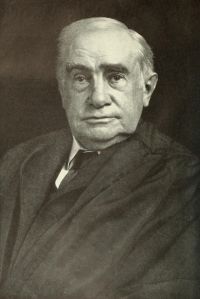
Portrait of Henry Billings Brown Henry Billings Brown Texas Railway Company v. Reeder…

If the plaintiff, while riding in a caboose, might, within the terms of the contract, have been visiting his cattle at the time the accident occurred, then the fact that he was actually riding in the same car with them while the car was in motion becomes immaterial, since the propriety of his action in being in the stock car must be gauged by the fact whether the train was in motion or not.
Source: Wikisource

Portrait of Henry Billings Brown Henry Billings Brown Texas Railway Company v. Reeder…

If cars were held to be in motion while making these trifling changes, the privilege of entering a stock car while the train was at rest would be of no practical value. The more reasonable interpretation is that by the word 'motion,' as here used, is intended that continuous movement of the cars towards their destination which is commonly understood when we speak of moving trains or trains in motion.
Source: Wikisource

Portrait of Henry Billings Brown Henry Billings Brown Texas Railway Company v. Reeder…

In this connection defendant relies upon the ninth clause of the contract under which plaintiff was traveling and transporting his stock, which provided that 'the person or persons in charge of live stock covered by this contract shall remain in the caboose car attached to the train while the same is in motion.' This clause was undoubtedly intended to provide a safe place for drovers in attendance upon their stock, although in the case of emigrants accompanying their outfits it was a common custom to permit them to ride in the car with their outfits.
Source: Wikisource

Get perspective with Kwize: daily news enlightened by great literature