Summary

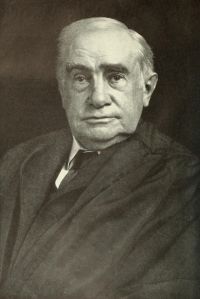
Portrait of Henry Billings Brown Henry Billings Brown United States v. Budd/Dissent Brown…

When we see the most valuable portion of an immense domain, which has been reserved by the beneficence of congress for the benefit of actual settlers, or of small proprietors, being gradually absorbed by a few speculators, we are forced to inquire whether there is not a limit beyond which even a land patent of the United States begins to lose something of its sanctity.
Source: Wikisource

Portrait of Henry Billings Brown Henry Billings Brown United States v. Budd/Dissent Brown…

While it is true that, from the fact that a person has been guilty of fraud in one transaction, it is not necessarily implied that he has been guilty of it in another, the probability of a fraudulent intent is very greatly increased by the multiplication of transactions of a similar nature.
The evidence in this case tends to show that defendant Montgomery had, by this and other devices, appropriated to himself over 10,000 acres of land in and about this neighborhood. It is unnecessary to say that, however this may have been done, it is a practical defeat of the intention of congress.
Source: Wikisource

Portrait of Henry Billings Brown Henry Billings Brown United States v. Budd/Dissent Brown…

Our experience with human nature teaches us that men who are guilty of a transaction of this kind will not hesitate to put upon file a formal denial of their bad faith, and we hazard nothing in saying that the first impulse of an innocent man under such circumstances would be to offer himself as a witness in his own behalf, and vindicate his own conduct in the transaction.
Source: Wikisource

Get perspective with Kwize: daily news enlightened by great literature