Summary

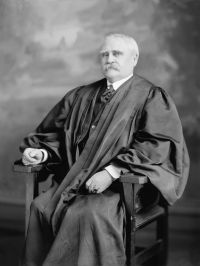
Portrait of Horace Harmon Lurton Horace Harmon Lurton Shelton v. King — Opinion of the Court

Neither do we for a moment question the rule that one may not by his own act preserve to himself the enjoyment of property in such manner that it shall not be subject to the claims of creditors, or placed beyond his own power of alienation.
But a very different question is presented when we come to the powers of a testator to so bestow that which is absolutely his own as to secure its beneficial enjoyment by an object of his bounty without being subject to the claims of assignees or creditors.
Source: Wikisource

Portrait of Horace Harmon Lurton Horace Harmon Lurton Shelton v. King — Opinion of the Court

Masterman rest involves the acceptance of the limitation which the earlier English cases place upon the powers of a testator in so disposing of his property that it may be enjoyed by the recipient without liability to creditors. The foundation of the English doctrine in both classes of cases is an assumption that there is some settled principle of public policy which subjects all property in which one has a beneficial ownership to the claims of creditors, and forbids restraint upon alienation.
Source: Wikisource

Get perspective with Kwize: daily news enlightened by great literature