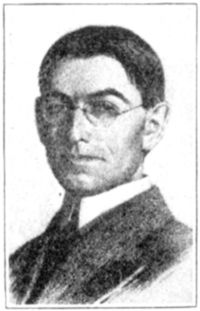
Hugh Pendexter

Hugh Pendexter

Summary

Portrait of Hugh Pendexter Hugh Pendexter,  Fakes and Puzzles (1923)

“ A MAN of normal mentality would suppose the faking of Indian pictographs to be about the last bit of mischief to occupy his fellow beings. Yet numerous frauds of the character have been perpetrated either from some moral perversion that delights in a hoax, or from a desire to sell the bogus for something ancient and therefore valuable. ”
Source: Wikisource

Portrait of Hugh Pendexter Hugh Pendexter,  Fakes and Puzzles (1923)

“ The Ohio Archeological and Historical Society in 1877 reported eight findings, which, condensed, held that the inscription need not be considered alphabetical; if so it can not be referred to any known language; it is precisely of such character as would result from an ordinary attempt to manufacture an inscription; it is within the capacity of any laborer of ordinary intelligence who may have been working on the mound; it was not properly studied to determine whether it was of recent manufacture or not; evidence that it came from the mound is not conclusive ”
Source: Wikisource

Portrait of Hugh Pendexter Hugh Pendexter,  Fakes and Puzzles (1923)

“ The most celebrated “find” to be questioned is that of the Grave Creekstone, said to have been taken from Grave Creek mound, prehistoric Indian work near Moundsville, Marshall County, West Virginia. The stone was divided by four lines, practically parallel, which separated a bit more than a half of the surface into five fields of approximate width. Within three of these fields are twenty-four characters, the lower half being occupied by a crude suggestion of a human face in profile attached to what resembles a dagger blade. ”
Source: Wikisource

Get perspective with Kwize: daily news enlightened by great literature