Summary

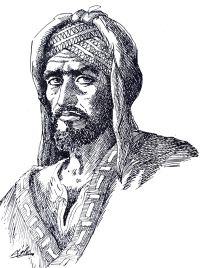
Portrait of Imru' al-Qais Imru' al-Qais Arabian Poetry for English Readers… (1881)

On that day I killed my camel, to give the virgins a feast; and, oh! how strange was it that they should carry his trappings and furniture!
10. The damsels continued till evening helping one another to the roasted flesh, and to the delicate fat, like the fringe of white silk finely woven.
11. On that happy day I entered the carriage, the carriage of Onaiza, who said: "Wo to thee! thou wilt compel me to travel on foot."
Source: Wikisource

Portrait of Imru' al-Qais Imru' al-Qais Arabian Poetry for English Readers… (1881)

Amriolkais therefore instantly killed the young camel on which he had ridden, and having called the female attendants together, made a fire and roasted him. The afternoon was spent in gay conversation, not without a cheerful cup, for he was provided with wine in a leathern bottle. But, when it was time to follow the tribe, the prince (for such was his rank) had neither camel nor horse; and Onaiza, after much importunity, consented to take him on her camel, before the carriage, while the other damsels divided among themselves the less agreeable burden of his arms and the furniture of his beast.
Source: Wikisource

Portrait of Imru' al-Qais Imru' al-Qais Arabian Poetry for English Readers… (1881)

When other horses that swim through the air are languid and kick the dust, he rushes on like a flood, and strikes the hard earth with a firm hoof.
51. He makes the light youth slide from his seat, and violently shakes the skirts of a heavier and more stubborn rider;
52. Rapid as the pierced wood in the hands of a playful child, which he whirls quickly round with a well-fastened cord.
Source: Wikisource

Get perspective with Kwize: daily news enlightened by great literature