Summary

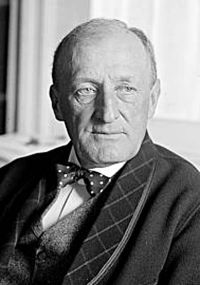
Portrait of James Clark McReynolds James Clark McReynolds Crane v. Campbell — Opinion of the Court

We further think it clearly follows from our numerous decisions upholding prohibition legislation that the right to hold intoxicating liquors for personal use is not one of those fundamental privileges of a citizen of the United States which no state may abridge. A contrary view would be incompatible with the undoubted power to prevent manufacture, gift, sale, purchase or transportation of such articles-the only feasible ways of getting them. An assured right of possession would necessarily imply some adequate method to obtain not subject to destruction at the will of the state.
Source: Wikisource

Portrait of James Clark McReynolds James Clark McReynolds Crane v. Campbell — Opinion of the Court

Provided, that so long as the manufacture of intoxicating liquors for beverage purposes shall not be prohibited within the state by the Constitution or by general law applicable by its terms to the state as a whole, it shall not be unlawful for any person, company or corporation to manufacture intoxicating liquors for beverage purposes in a prohibition district for transportation to and sale outside of the prohibition district: Provided, that nothing in this act shall be construed to apply to the manufacture, transportation or sale of wood or denatured alcohol.' 'Sec.
Source: Wikisource

Portrait of James Clark McReynolds James Clark McReynolds Crane v. Campbell — Opinion of the Court

It must now be regarded as settled that, on account of their well-known noxious qualities and the extraordinary evils shown by experience commonly to be consequent upon their use, a state has power absolutely to prohibit manufacture, gift, purchase, sale, or transportation of intoxicating liquors within its borders without violating the guarantees of the Fourteenth Amendment.
Source: Wikisource

Get perspective with Kwize: daily news enlightened by great literature