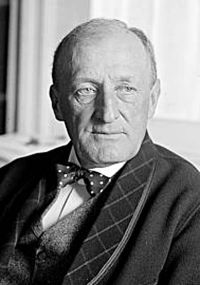
James Clark McReynolds

James Clark McReynolds

Summary

Portrait of James Clark McReynolds James Clark McReynolds Erie Company v. Shuart — Dissent

I dissent from the opinion of the court because I agree with the three New York courts that the undisputed facts thus stated show that the transportation was ended and the delivery of the stock was so completely made as to end all liability of the carrier under the bill of lading, before the negligence of the company occurred which caused the damage complained of.
What constitutes delivery of goods or of live stock by a carrier is usually a mixed question of law and fact, but where, as here, the facts are not disputed, it is a question of law.
Source: Wikisource

Portrait of James Clark McReynolds James Clark McReynolds Erie Company v. Shuart — Dissent

I greatly regret that I cannot concur in the opinion and judgment of the court in this case, but I cannot consent to share in what seems to me a very strained construction of a definition in the Hepburn Act (34 Stat. 584, c. 3591, § 1 [Comp. St. § 8563] ) which will result in keeping alive a bill of lading, with the effect of excusing the carrier from liability for negligently damaging the live stock of a consignee, after it had been delivered, on the ground that a claim in writing for the damage, duly verified, had not been presented within five days.
Source: Wikisource

Get perspective with Kwize: daily news enlightened by great literature