Summary

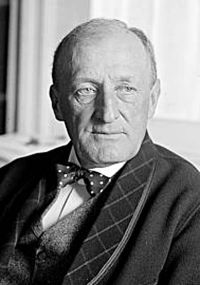
Portrait of James Clark McReynolds James Clark McReynolds McIntyre v. Kavanaugh — Opinion of the Court

It is urged that the malice referred to in the exception is malice towards the individual personally, such as is meant, for instance, in a statute for maliciously injuring or destroying property, or for malicious mischief, where mere intentional injury without special malice towards the individual has been held by some courts not to be sufficient.
Source: Wikisource

Portrait of James Clark McReynolds James Clark McReynolds McIntyre v. Kavanaugh — Opinion of the Court

We can find no sufficient reason for such a narrow construction. And instead of subserving the fundamental purposes of the statute, it would rather tend to bring about unfortunate if not irrational results. Why, for example, should a bankrupt who had stolen a watch escape payment of damages, but remain obligated for one maliciously broken?
Source: Wikisource

Portrait of James Clark McReynolds James Clark McReynolds McIntyre v. Kavanaugh — Opinion of the Court

That partners are individually responsible for torts by a firm when acting within the general scope of its business, whether they personally participate therein or not, we regard as entirely clear. Castle v. Ballard, 23 How. 172, 16 L. ed. 424; Re Peck, 206 N. Y. 56, 41 L.R.A. (N.S.) 1223, 99 N. E. 258, Ann. Cas. 1914A, 798. If, under the circumstances here presented, the firm inflicted a wilful and malicious injury to property, of course, plaintiff in error incurred liability for that character of wrong.
Source: Wikisource

Get perspective with Kwize: daily news enlightened by great literature