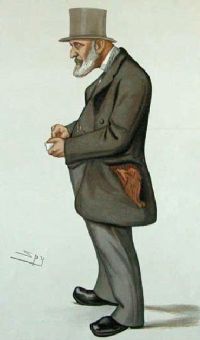
James Edwin Thorold Rogers

James Edwin Thorold Rogers

Summary

Portrait of James Edwin Thorold Rogers James Edwin Thorold Rogers The Story of Nations - Holland… (1886)

The Venetian ambassador reckoned that ten years before his abdication Charles had put to death for their religion no less than thirty thousand persons in Holland and Friesland alone.
There is no reason to believe that Charles persecuted for any other reason than policy. He had no more morality than the rest of European sovereigns, for, with all his activity, his life was a long licentious debauch. His son Philip was, in the current sense of the word, religious, for his deference to the Pope was profound and incessant.
Source: Wikisource

Portrait of James Edwin Thorold Rogers James Edwin Thorold Rogers The Story of Nations - Holland… (1886)

These events have little to do with the history of the Netherlands, beyond the fact that, during their occurrence, it was necessary to keep the Flemings and Hollanders in good humour. It is true that Philip early disregarded his father’s advice. Charles had counselled him to govern the Netherlands by Netherlanders, for he knew well that the country had nobles enough who would betray its interests, and play into the king’s hands. But Philip governed entirely by Spaniards, and so gave occasion to that bitter hatred of Spain which formed the bond of union between these disjointed commonwealths.
Source: Wikisource

Portrait of James Edwin Thorold Rogers James Edwin Thorold Rogers The Story of Nations - Holland… (1886)

Philip could not speak any other tongue than Spanish. Charles was constantly talking; Philip was habitually silent. Charles could be boisterous in his mirth; Philip was sullen and retiring, and was hardly known even to smile.
The Prince of Orange was at this time twenty-two years old. The place from which the hero of Dutch independence took his title was situated in the South of France, near Avignon, and the family were originally vassals of the Pope, who was for centuries the Lord of Avignon. But they had migrated to the Netherlands, and had filled high offices under the Burgundian princes.
Source: Wikisource

Get perspective with Kwize: daily news enlightened by great literature