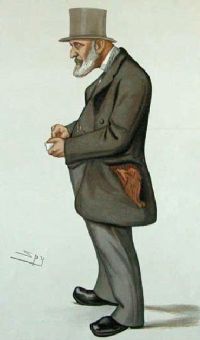
James Edwin Thorold Rogers

James Edwin Thorold Rogers

Summary

Portrait of James Edwin Thorold Rogers James Edwin Thorold Rogers The Story of Nations - Holland… (1886)

It had undoubtedly been case that in early times Holland had formed part of the German Empire, and the fact had not been forgotten in the negotiations between Philip and emperor. Had the proposition of William been accepted, the independence of Holland would practically have been secured, for the States would have occupied the position which the German sovereigns did under what was no more than the nominal supremacy of the emperor.
Source: Wikisource

Portrait of James Edwin Thorold Rogers James Edwin Thorold Rogers The Story of Nations - Holland… (1886)

Another difficulty was in the family relations of the emperor and Philip. The princes of Austria, Spain, and Portugal were closely connected by family ties, and marriages often taking place between certain members of these families, by the Pope’s dispensation, which would have been impossible in any other persons. In Spain and Portugal the marriage of uncle and niece was far from uncommon, and ever more closely related persons were, as political exigencies seemed to dictate, contemplated for such unions.
Source: Wikisource

Portrait of James Edwin Thorold Rogers James Edwin Thorold Rogers The Story of Nations - Holland… (1886)

But Orange still kept up the form of loyalty, and the charter of the university declares that it was founded by Philip, Count of Holland.
The two provinces, Holland and Zeland, though Harlem and Amsterdam were still in the power of the enemy, raised nearly as high a revenue monthly for the prosecution of the war, as Alva had been able to extract yearly from the rest of the Netherlands. The fact is, their trade grew with their efforts. They were still in theory subjects of Spain, and they traded with the Spanish possessions.
Source: Wikisource

Get perspective with Kwize: daily news enlightened by great literature